Why Clever Messaging Sometimes Creates Friction: The Southwest Drink Ticket Mix-Up
I’m always paying attention to the tiny moments where messaging either clicks instantly or creates friction. Southwest Airlines accidentally gave me a perfect example this week.
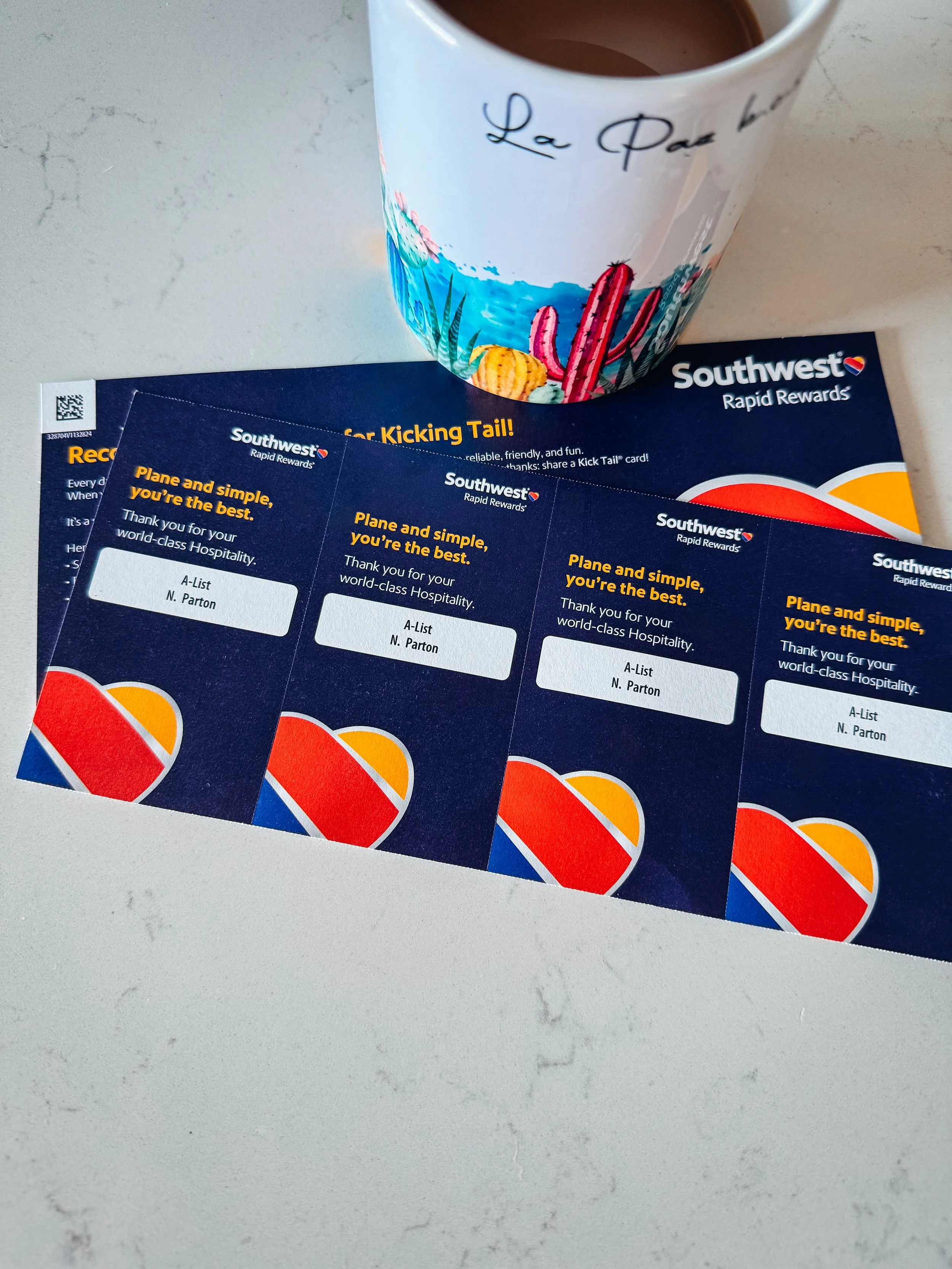
I opened some mail from them and immediately got excited because inside were what appeared to be the return of the old Southwest drink tickets. Same format. Same visual language. And — at the risk of sounding like a lush — it triggered the same brand memory for me.
I literally squealed!
Then I looked closer.
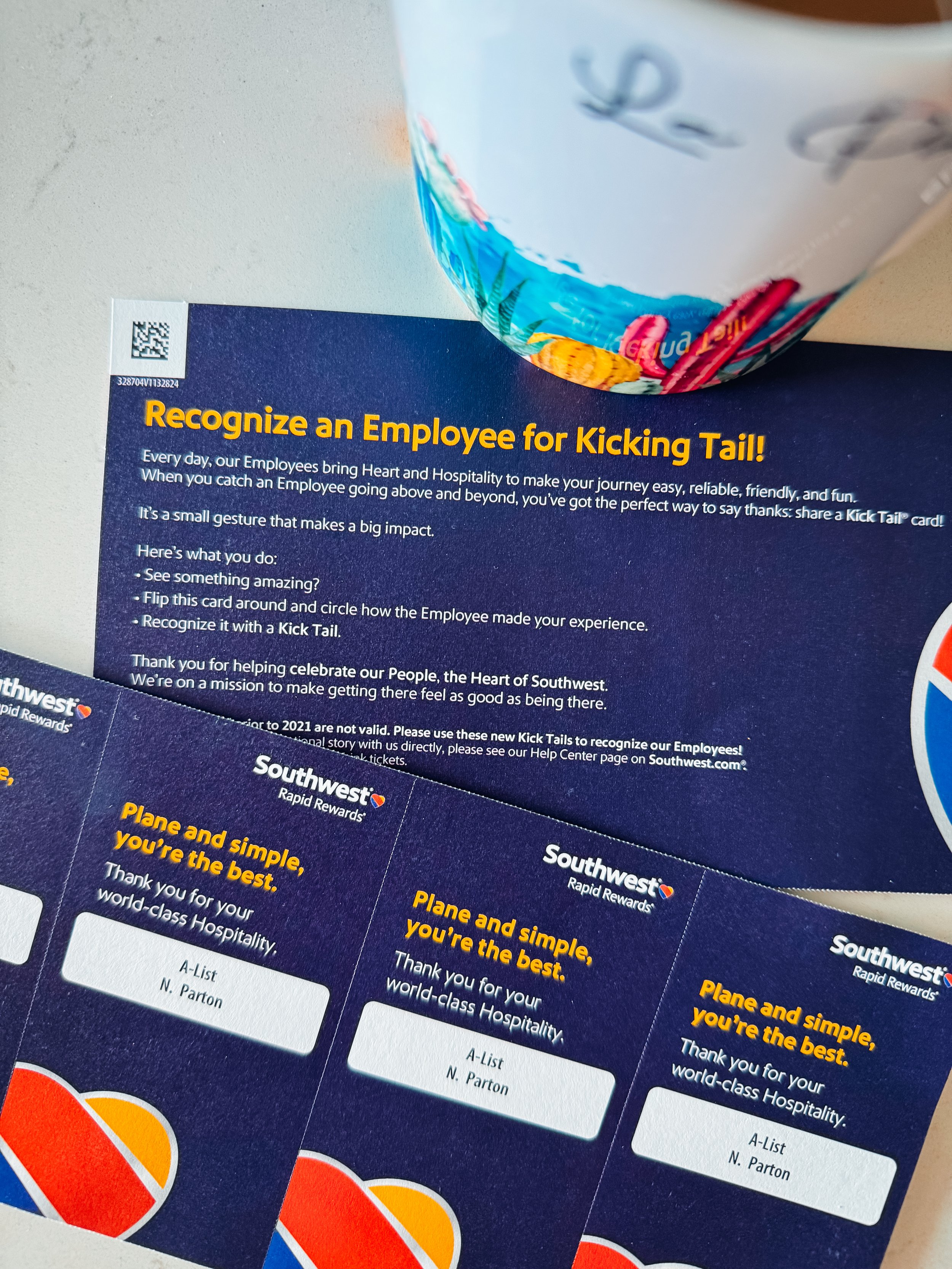
These weren’t surprise drink tickets at all; they were employee recognition cards passengers could hand to Southwest staff who go above and beyond.
To be clear, I actually love this as a concept. Southwest employees are often genuinely exceptional, and I enjoy recognizing great service. But the experience itself highlighted something important about messaging and audience context:
My brain had already decided what these were before I ever read the fine print.
Because that’s what strong branding does:
Branding + visual memory = expectation.
And once that expectation is set, the copy has to work twice as hard to redirect it.
The challenge is that the core purpose of the piece wasn’t immediately clear. The headlines (“Plane and simple, you’re the best.” / “Recognize an Employee for Kicking Tail!”) leaned heavily into brand personality, while the actual explanation lived in smaller copy after the expectation had already been set. It made me think about how often we accidentally create cognitive dissonance by prioritizing cleverness over clarity.
It’s also a good reminder about audience segmentation. If you’re sending something that visually mirrors a legacy loyalty perk to longtime A-List customers who previously received drink tickets in this exact format… you have to account for the associations you’ve already trained into that audience.
The best messaging doesn’t make people work to understand what’s happening. It meets them where their expectations already are and guides them clearly from there.